
Going faster with LESS effort? Yes, it's possible.
Most cyclists focus only on getting stronger. More intervals. Higher FTP. Better nutrition.
But there's a faster way to get faster: Stop fighting the wind.
Here's what most people don't realize:
Your position on the bike can cost you 20-40 watts. That's like carrying a heavy backpack while racing.
Two riders. Same power. Different positions. One wins. One loses.
Real example - Same athlete, same course, 2 years apart:
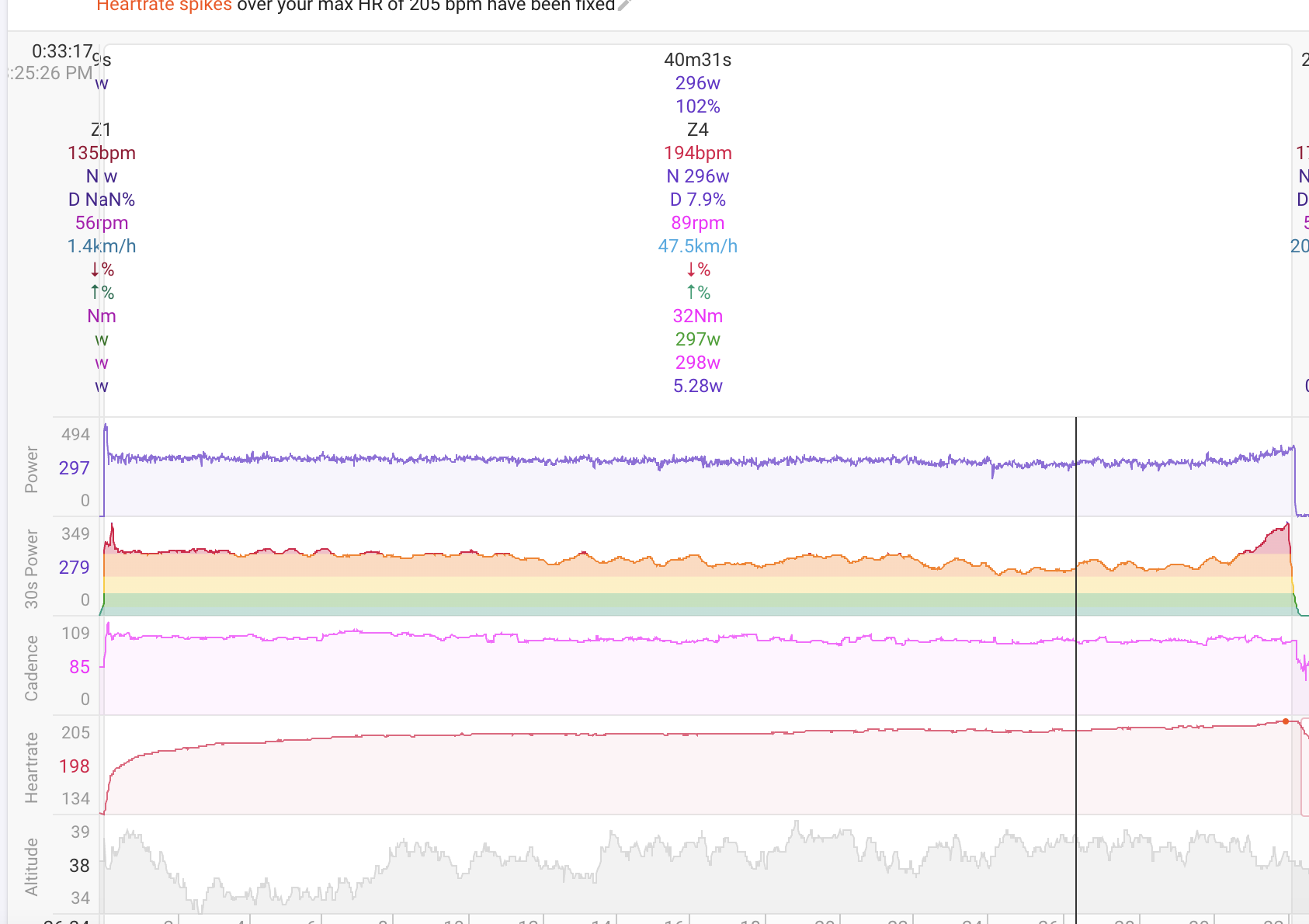
📊 2024 Race:
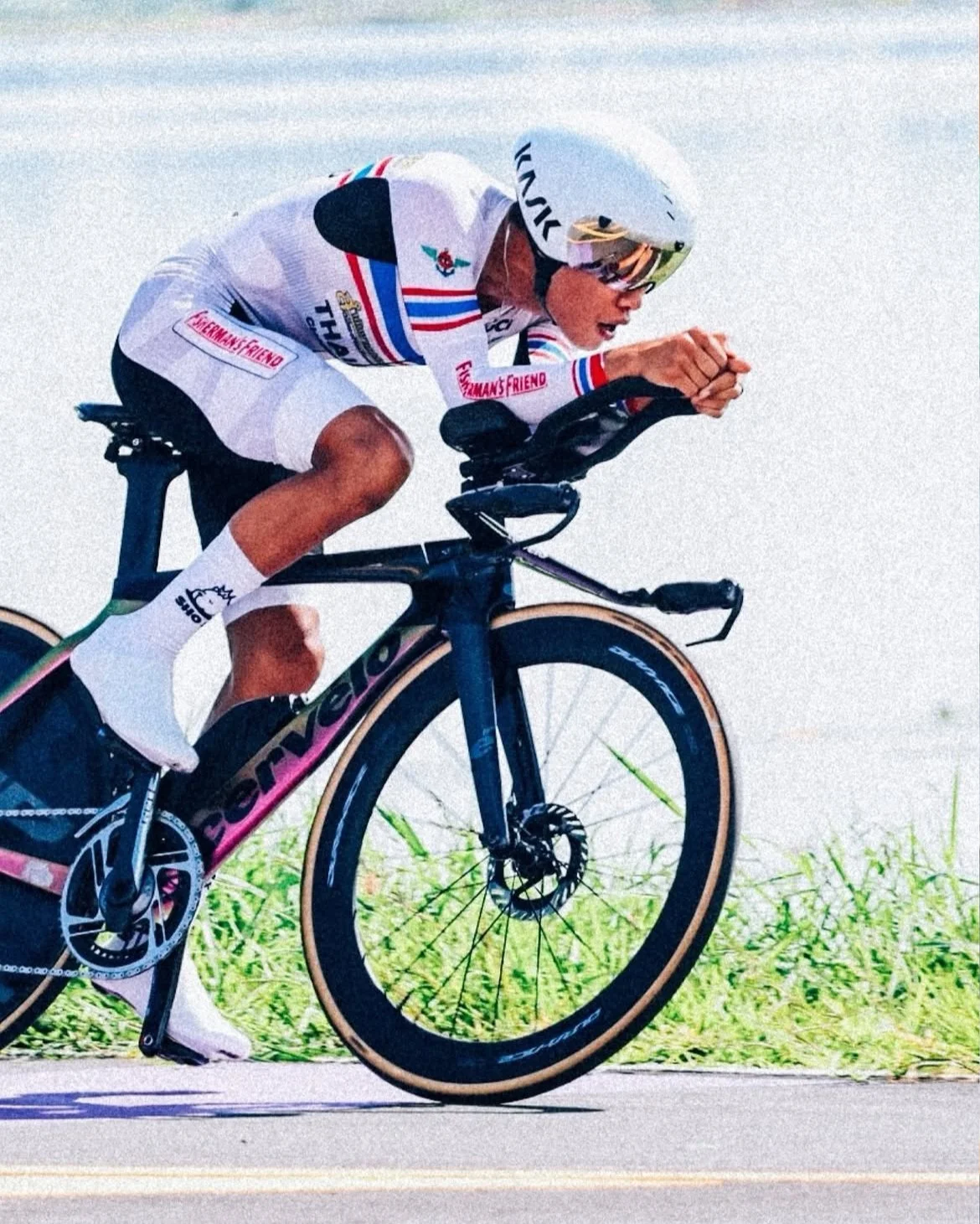
Power: 296 watts
Speed: 47.5 km/h
Heart rate: 194 bpm (working very hard)
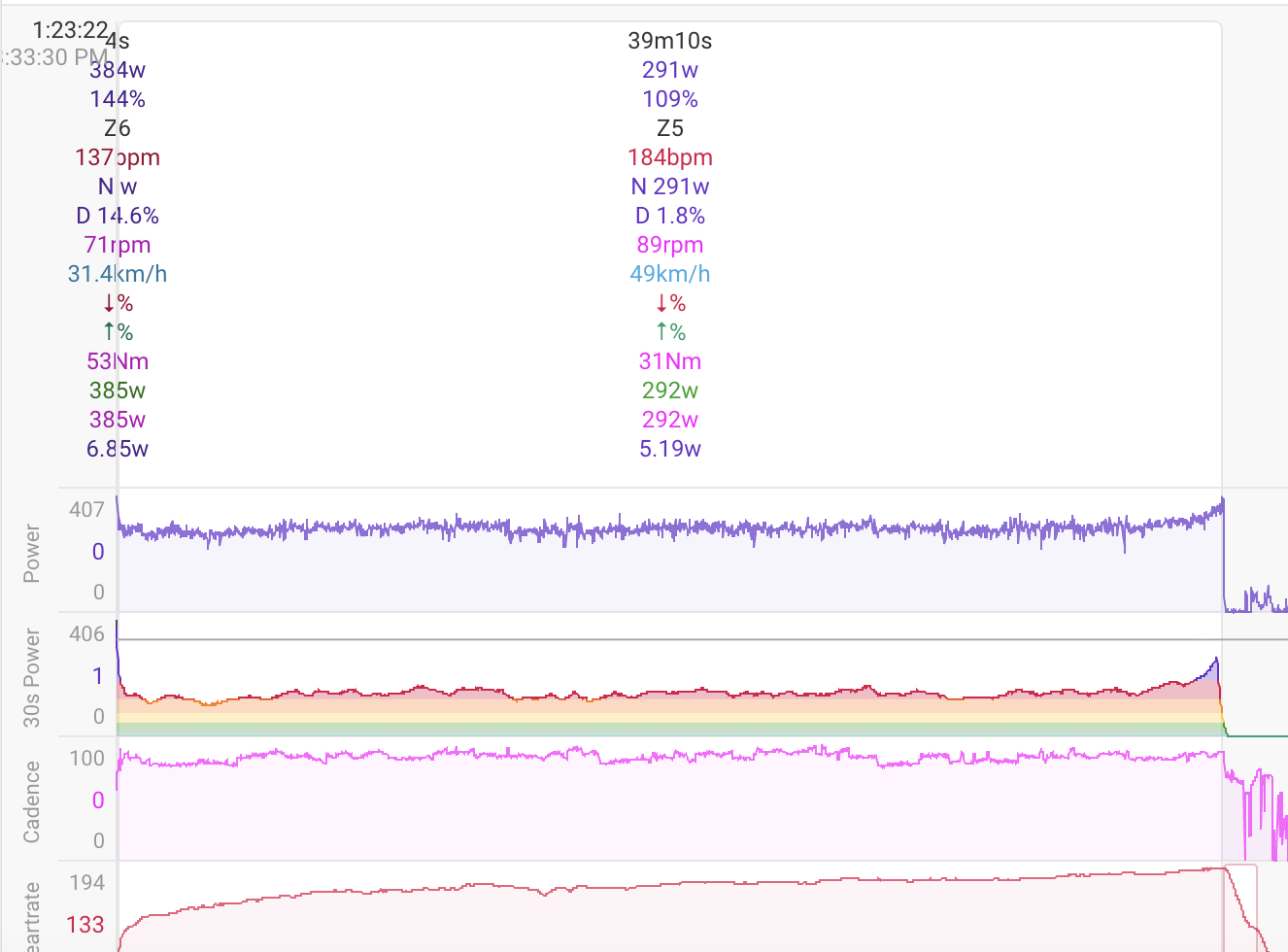
📊 2025 Race:
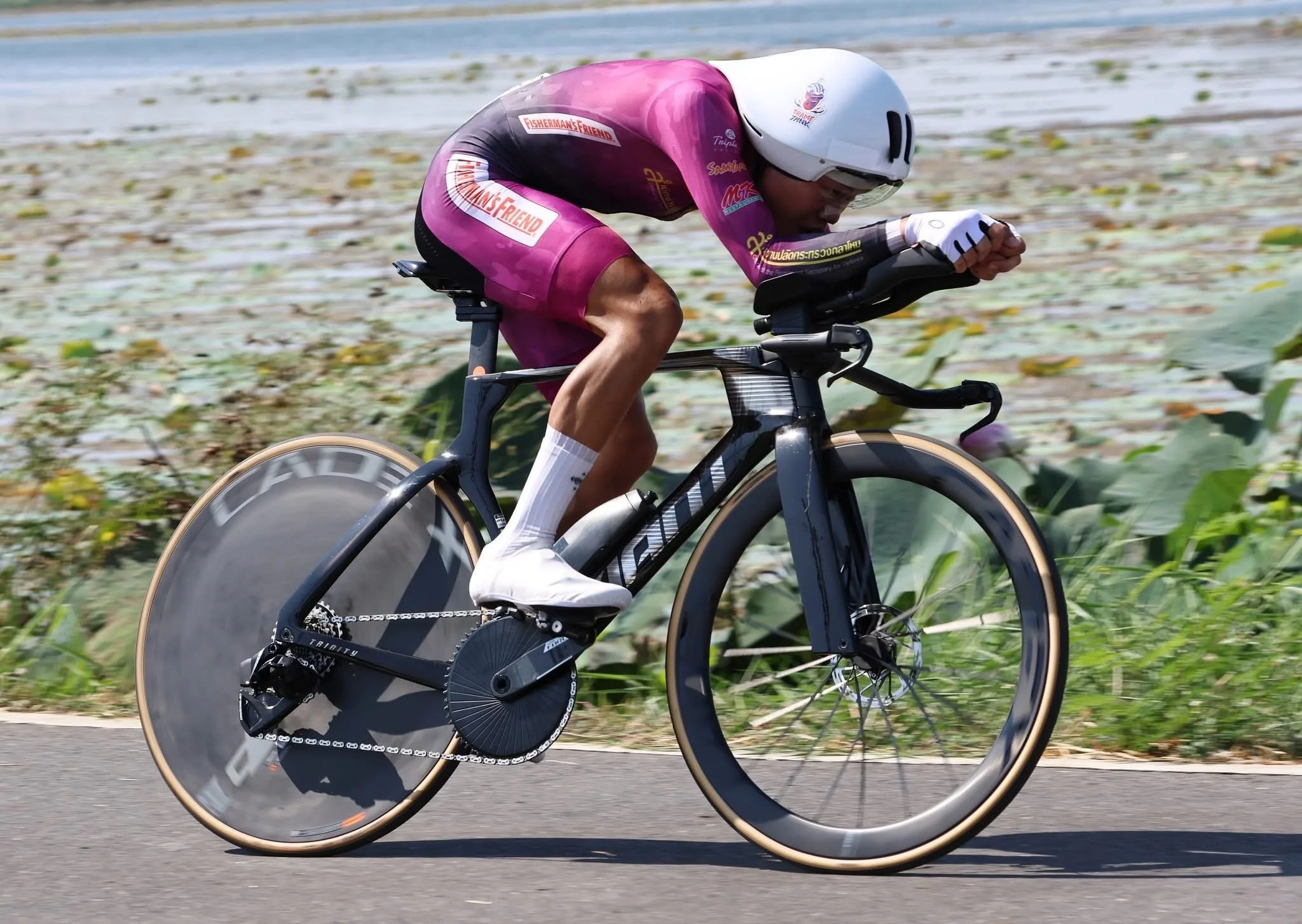
Power: 291 watts (5 watts LESS)
Speed: 49 km/h (1.5 km/h FASTER)
Heart rate: 184 bpm (10 beats lower - less effort)
Wait... less power but faster speed?
Yes. Because we fixed the position and equipment over 2 years of testing.
What we changed:
✅ Better body position
Lowered the saddle for flatter back
Head lower and more streamlined
Elbows tucked in closer
Currently waiting for custom extensions to improve arm angle even more
✅ Equipment upgrades
More aerodynamic helmet
Switched from 2 chainrings to single 58t (cleaner, less drag)
Better-fitting skinsuit (no fabric flapping)
Waxed chain (less friction = free watts)
The result so far?
Less energy spent = Faster speed = Lower heart rate
And we're not done yet. Custom extensions coming soon for even better position.
It's like removing a parachute from your back.
Why does this matter?
At high speeds (40+ km/h), 80-90% of your effort goes into fighting air resistance. Only 10-20% actually moves you forward.
So even small improvements in aerodynamics = BIG speed gains.
Think about it:
Building 10 more watts of power = months of hard training
Saving 10 watts of drag = 1 afternoon of position work
Saving 3-5 watts from chain friction = cleaning and waxing your chain
All these small gains add up.
What's costing you speed right now:
❌ Saddle too high - Forces your back to be less flat ❌ Head too high - Looking straight ahead instead of down the road ❌ Elbows wide - Flared out like wings ❌ Wrong extension angle - Doesn't allow optimal arm position ❌ Rounded back - Not flat enough ❌ Tense shoulders - Riding with shoulders up near your ears ❌ Loose clothing - Jersey flapping in the wind ❌ Unnecessary equipment - Extra chainrings you don't use ❌ Dirty chain - Regular lube creates more friction than wax
What makes you faster:
✅ Saddle height - Sometimes lower is more aero (even if it feels different) ✅ Head position - Low but still able to see (practice this!) ✅ Flat back - As horizontal as comfortable ✅ Proper extension angle - Custom extensions can optimize your arm position ✅ Narrow elbows - Tucked in close to your body ✅ Relaxed shoulders - Dropped and comfortable ✅ Tight-fitting kit - Skinsuit or race-fit jersey ✅ Clean setup - Only the gears you actually need ✅ Waxed chain - Smoother, cleaner, faster (3-5 watts saved)
How to improve YOUR position:
1. Use a mirror during indoor sessions - THE SQUARE TEST Set up a mirror next to your indoor trainer. While riding in aero position, imagine a square box. Your goal: fit your entire body inside that square.
Top of square = top of your head/helmet
Bottom of square = bottom bracket/pedals
Front of square = tip of your elbows/hands
Back of square = your hips/saddle
If your back is rounded, head is high, or elbows are flared, you won't fit in the square. Practice holding a position that keeps you compact and inside the box.
This visual trick makes it easy to see if you're actually aero or just uncomfortable.
2. Get someone to film you Record yourself from the side while riding. You'll be shocked at what you see. Compare it to your mirror sessions.
3. Consider saddle height A slightly lower saddle can allow a flatter back. You might lose a tiny bit of power but gain much more in aero savings. Test it and measure the results.
4. Check your extension angle Standard extensions don't fit everyone. The angle might be forcing your shoulders up or preventing a flat back. Custom extensions can be made to match your body geometry.
5. Practice the position Don't just use it on race day. Train in your aero position so your body adapts. Use the mirror and square test every indoor session.
6. Make small changes Move your aerobars 1cm at a time. Lower your saddle 2-3mm at a time. Lower your head gradually. Let your body adjust.
7. Optimize your drivetrain Wax your chain instead of using traditional lube. It's cleaner, lasts longer, and saves 3-5 watts. That's free speed you can get today.
8. Test and measure If you have a power meter, do the same route twice. Once in normal position, once more aero. Same power - which one is faster?
Important notes:
About the square test: The more compact you can make yourself (while staying comfortable), the less wind resistance you create. Think of yourself as trying to fit through the smallest window possible. If any part of you is sticking out (high head, wide elbows, rounded back), you're creating drag.
About saddle height: Most people set their saddle for maximum power. But in a TT, maximum aero is often more important than maximum power.
A 5mm lower saddle might cost you 2-3 watts of power. But if it allows you to get 10mm lower in the front and save 15 watts of drag? That's a net gain of 12+ watts.
About extension angle: Off-the-shelf extensions come in standard angles. But your body isn't standard. If the angle doesn't match your flexibility and shoulder width, you'll either:
Be uncomfortable (can't hold the position)
Have a worse position (shoulders forced up, back not flat)
Custom extensions solve this. They're not expensive and can unlock significant aero gains.
About chain waxing: A waxed chain can save 3-5 watts compared to traditional wet lube. It also stays cleaner and lasts longer. In a 30-minute TT, that's enough to gain several seconds.
Power losses from position changes are usually smaller than aero gains.
The bottom line:
You don't need to be a pro to benefit from this. You don't need expensive equipment. You just need to:
Use a mirror and practice the square test
Pay attention to how you sit on the bike
Make sure your equipment fits your body
Keep your drivetrain clean
This took us 2 years of small adjustments and testing. Indoor sessions with a mirror were key to dialing in the position. And we're still improving - custom extensions on the way. But each change made the athlete faster with the same effort.
The fastest riders aren't always the strongest. They're the ones who waste the least energy.
Position first. Equipment fit. Drivetrain efficiency. Power last.
Get your aerodynamics right, optimize your equipment, and suddenly the same effort gets you much faster results.
Free speed is the best speed.