
You know the feeling. That perfect interval session where every number hits exactly where it should. Heart rate climbs right on target. Power stays locked in. You finish feeling like you could do another set.
You post it to Strava. The kudos roll in. Someone comments "beast mode." Your coach sends a thumbs up.
And suddenly, every other session needs to feel like that.
The Problem With Perfect
Hard training creates a specific neurochemical response. Your brain releases dopamine during effort, more when you hit targets, even more when you exceed them. The challenge, the achievement, the feedback loop—it all lights up your reward system.
This is useful. It's what makes you capable of suffering through intervals when everything hurts.
But it also creates a problem: your brain starts expecting every session to deliver that hit.
When Good Enough Isn't Good Enough
Base training should be boring. Recovery rides should feel like you're barely trying. Easy weeks should leave you restless and under-stimulated.
That's the point.
But if your reward system is calibrated to hard efforts and perfect execution, moderate intensity feels like wasted time. You're physically going through the motions, but mentally you're understimulated, distracted, checking your watch every five minutes to see if you can push harder.
So you do. You turn your recovery ride into tempo. Your base miles into threshold. Your easy week into "let's just see what I can do."
And you wonder why you're tired all the time.
The Comparison Trap
It gets worse when you're scrolling through other people's training. Everyone's posting their best sessions. The hardest intervals. The biggest volume weeks. The perfect numbers.
Nobody posts their easy spin around the neighborhood or their deliberate recovery week. That content doesn't get engagement.
So you're comparing your entire training week—including the boring, necessary parts—to everyone else's highlight reel. Your brain interprets this as falling behind.
The anxiety builds. You train harder to keep up with people who might actually be resting more than you are.

What Actually Drives Improvement
The athletes who make consistent long-term gains aren't necessarily the ones who crush every session. They're the ones who can:
Ride at genuinely easy intensities without needing to prove anything
Take full recovery weeks without spiraling into anxiety
Build base fitness through months of unremarkable training
Show up consistently rather than heroically
This requires a different kind of mental strength than going deep in intervals. It requires tolerating the lack of stimulation.
The Strava Problem
Training platforms are designed around achievement and comparison. Every ride gets a response. PRs get highlighted. Segments create competition.
This isn't inherently bad. But it does mean you're constantly reinforcing your brain's expectation for immediate feedback and measurable achievement.
The training that matters most—the months of steady base building, the deliberate recovery periods, the patient development of aerobic capacity—doesn't create that feedback loop.
You need to be okay with that.
Practical Recognition
You might have a problem if:
Easy rides consistently turn into tempo efforts because slow feels wrong
You can't take a full recovery week without feeling anxious or guilty
You're constantly checking how your training compares to others
Rest days feel like wasted days
You need every session to feel "productive" or you're disappointed
You're tired but can't back off because it feels like quitting
These aren't character flaws. They're signs your dopamine system is running your training instead of supporting it.
The Real Work
Training your body is the easy part. You know how to suffer. You know how to push through discomfort.
Training your brain to tolerate low stimulation, to trust boring work, to value consistency over intensity—that's harder.
No one's posting their steady 200-watt base miles or their deliberate recovery weeks. But that's where sustainable improvement actually happens.
The question is whether you can do it without needing it to feel significant.
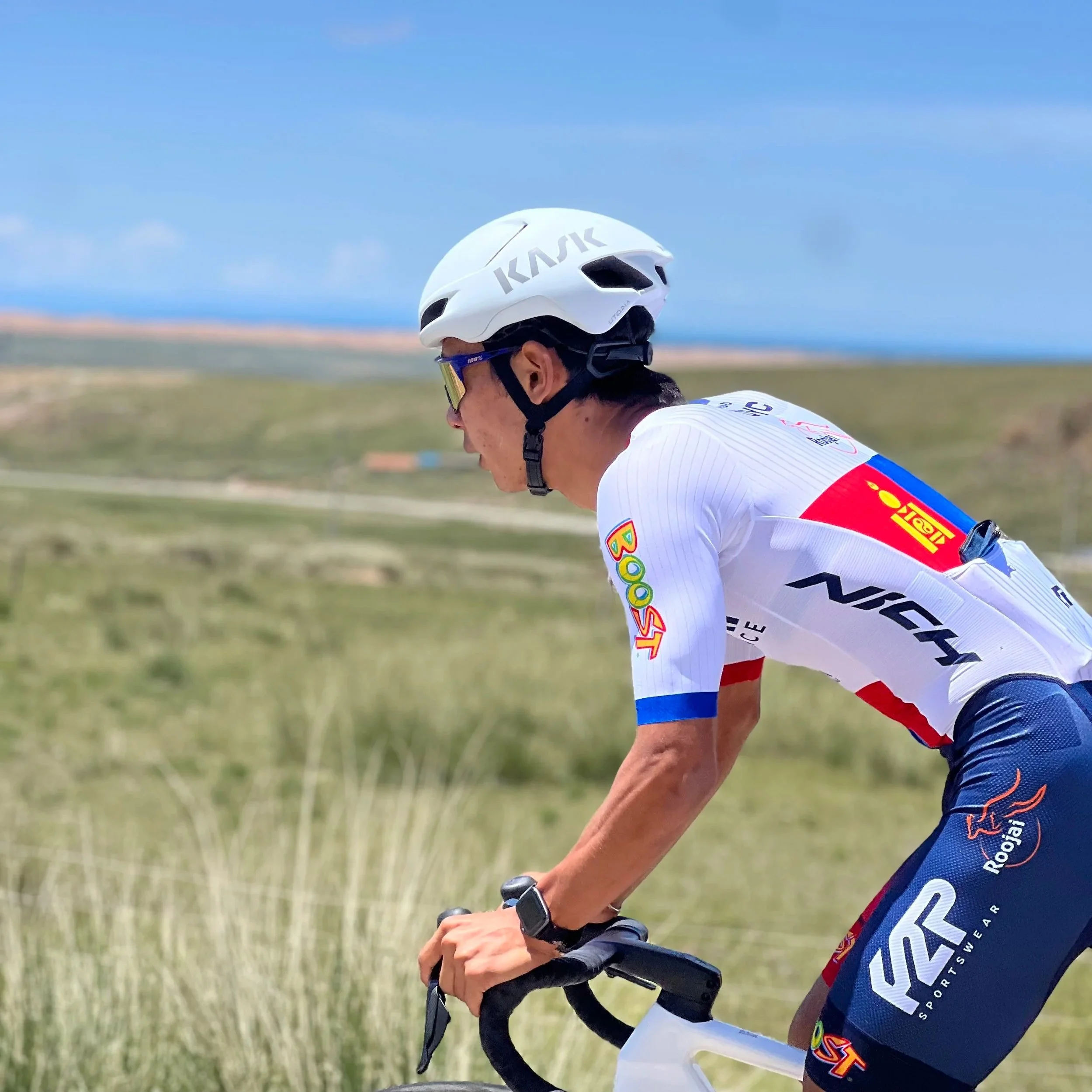
Peter Pouly coaches endurance athletes and manages Roojai Insurance Winspace UCI Continental Team. His approach focuses on sustainable performance development rather than short-term validation.